
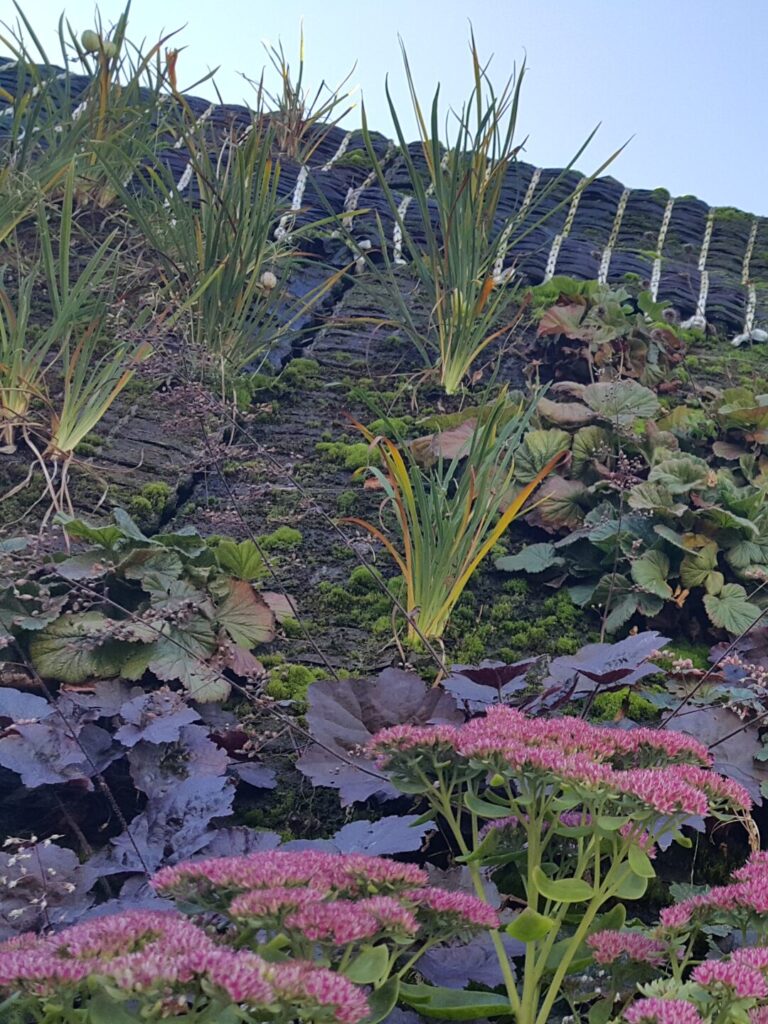
Textile-based curtain wall for thermally insulated greening
Irrigation was achieved via a capillary channel system to maintain the water supply even during periods of freezing and thawing. The capillary water transport capacity was determined to be 0.4 to 0.5 L/h for wicks and 5.6 to 7.1 L/h for mats, with a width of 1 m. The two demonstration sites at the project partners, Geisenheim University and Wirth & Co. GmbH in Chemnitz, allowed for the assessment of vegetation development on the vertical textile plant supports under different climatic conditions. At the Chemnitz site (Fig. 3), Epimedium perralchicum, Lysimachia nummularia, Waldsteinia ternata, Alchemilla erythropoda and Luzula sylvatica did not prove suitable; Heuchera hybrids, Sedum telephium and Hemerocallis hybrida can be recommended without reservation, whilst Tradescantia × andersoniana, Geum coccineum and Tellima grandiflora can be recommended with some reservations for the extreme conditions of vertical greening and this textile vegetation system.