A fresh approach to carbon and glass fibre composites
Multi-level Circular Process Chain for Carbon and Glass Fibre Composites
Objective
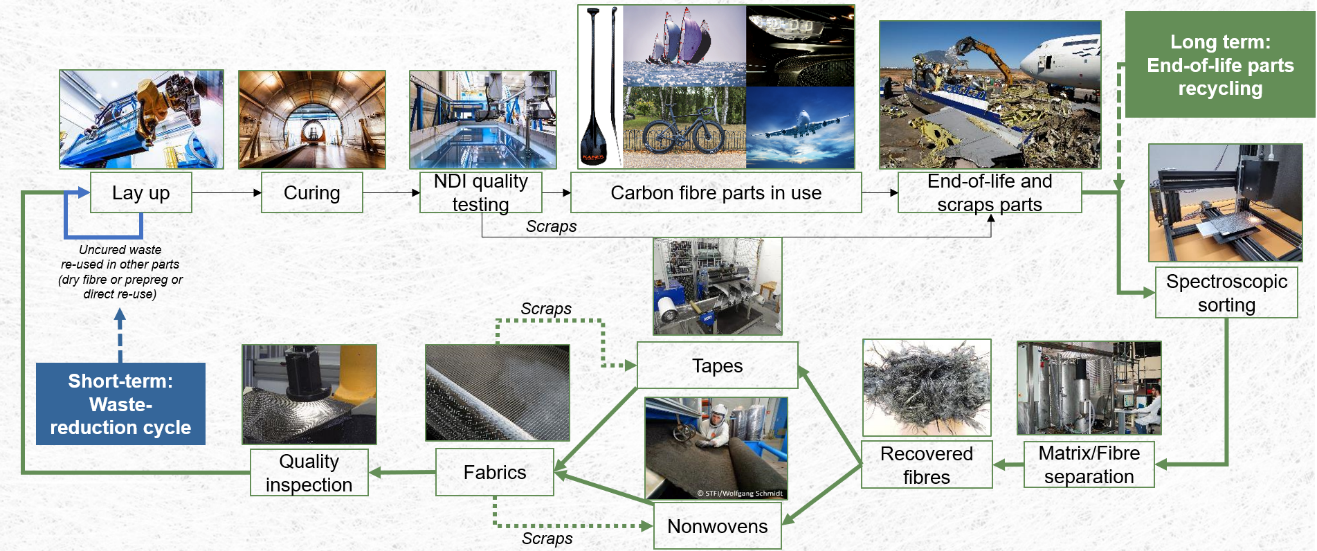
Composite materials are crucial in numerous technical applications where low weight combined with high stability and load-bearing capacity are important. However, these advantages come at a price. On the one hand, up to 40% of the material is currently converted into waste or by-products during the production process, and on the other hand, around 98% of the material ends up being incinerated or sent to landfill after a service life of 15 to 30 years with no prospect of recycling. The aim of the MC4 project was to contribute to the optimization of European value chains for carbon and glass fibres and the composites made of them.
Approach
A consortium of 16 partners from 10 European countries has been working on solutions and developments for the recycling or reuse of carbon fibre (CFRP) and glass fibre (GFRP) composite materials and their production waste, e.g. reuse of production waste from carbon fibre prepreg com-posites directly in the production process; construction of a pilot plant for solvolysis recycling of CFRP; mechanical recycling of GRP using larger grind sizes to better preserve the technical properties; use of a vitrimer resin for cutting and reshaping end products containing glass fibre, which extends the service life of the material.
Results
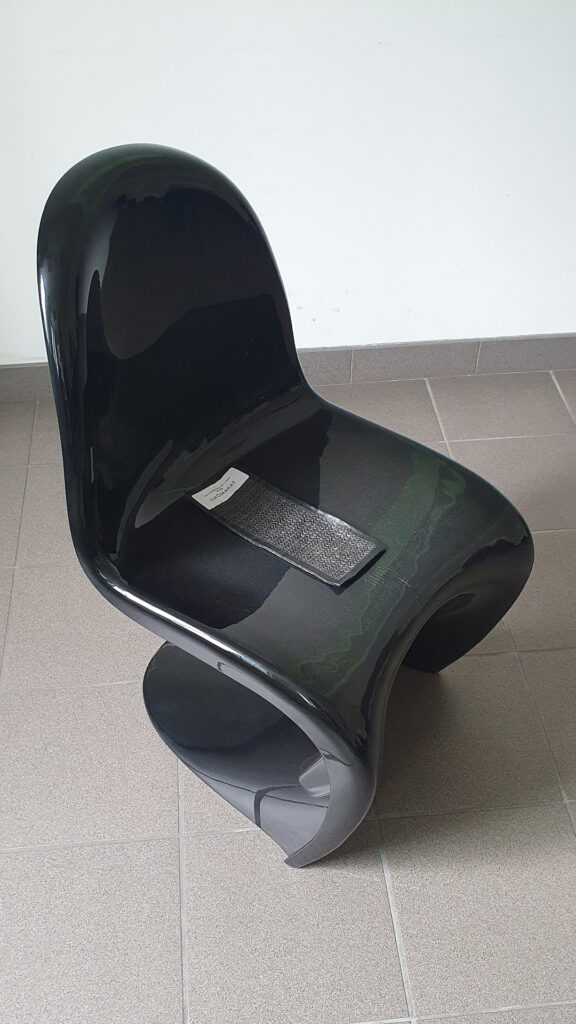
This resulted in various pilot products, e.g. ribs for aircrafts made from 100% production waste from carbon fibre prepregs; components made from carbon fibre production waste for recreational boat building (roof, interior); street furniture made from recycled GFRP and a kayak that can be cut up and reshaped at the end of its service life so that the glass fibre composite material can be reused for the manufacture of paddles.